

Commentary
Alexander Gabuev, Temur Umarov
{
  "authors": [
    "Alexander Gabuev"
  ],
  "type": "commentary",
  "blog": "Carnegie Politika",
  "centerAffiliationAll": "",
  "centers": [
    "Carnegie Endowment for International Peace",
    "Carnegie Russia Eurasia Center"
  ],
  "englishNewsletterAll": "",
  "nonEnglishNewsletterAll": "",
  "primaryCenter": "Carnegie Russia Eurasia Center",
  "programAffiliation": "",
  "regions": [
    "Russia",
    "China"
  ],
  "topics": [
    "Global Governance",
    "Energy",
    "Trade",
    "Foreign Policy"
  ]
}
Source: Getty
With no key agreement signed on the Power of Siberia 2 gas pipeline, there is a risk that the window of opportunity for Russia will close if Chinese power generation becomes so green that new gas sources are no longer of any interest to Beijing.
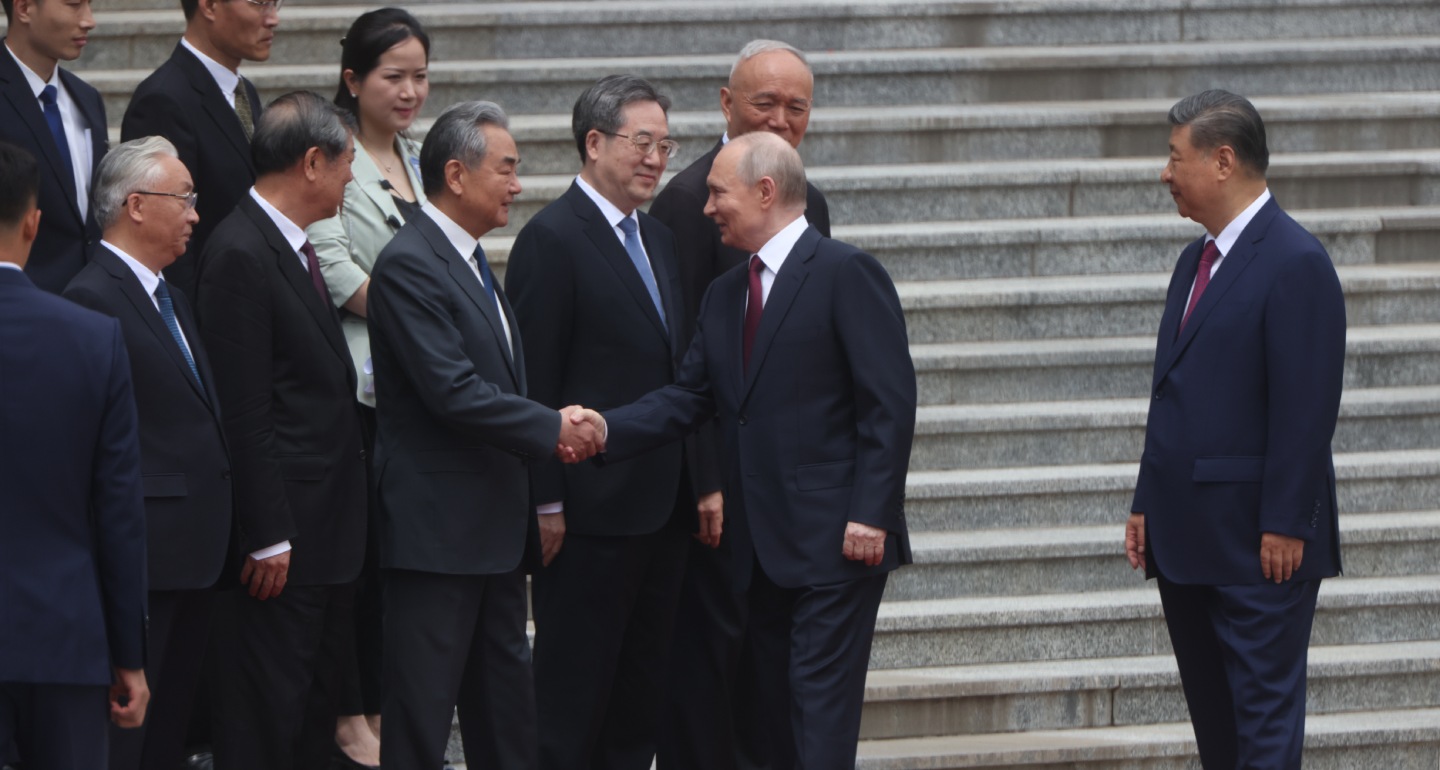
During Russian President Vladimir Putin’s visit to China last week, a grand total of forty-two documents were signed. But the ones Moscow had most hoped for—agreements on the construction of the Power of Siberia 2 gas pipeline and on commercial sales through it—were conspicuously absent.
The Chinese side has not commented on the issue at all, while Russian officials have made contradictory statements. Deputy Prime Minister Alexander Novak, who is responsible for the energy sector, claimed that significant progress had been made on Power of Siberia 2, while Putin’s spokesperson Dmitry Peskov said that no clear timeline for the project’s implementation had yet been agreed.
The more documents are signed at summits between Putin and his Chinese counterpart Xi Jinping, the more obvious it is that no significant breakthroughs have been made. That’s not to say that relations between Russia and China aren’t expanding across the board: Trade between the two countries is growing, and Moscow is becoming ever more firmly tied to Beijing. The Chinese are increasingly able to dictate which projects are of interest to them and which are not, and on what terms China will participate. The Power of Siberia 2 is a stark illustration. If anyone in Moscow had thought that U.S. President Donald Trump’s war against Iran and the blockade of the Strait of Hormuz had strengthened Russia’s position in negotiations with China, the outcome of Putin’s visit should dispel those illusions.
Trade between Russia and China needs no top-level agreements to keep it growing, as the two countries have complementary economies (the formula boils down to Russian natural resources in exchange for Chinese machinery). Western sanctions have cleared the way to the Russian market for Chinese companies and forced Russian raw materials exporters to focus on China and agree to discounts.
Bilateral trade turnover has exceeded $200 billion for two years in a row, and a new record could be set this year. From January to April, it increased 19.7 percent year-on-year to reach $85.2 billion. Not only did Russian exports increase (by 17 percent to $47.4 billion) due to rising oil prices; imports also grew by 23.1 percent to $37.8 billion.
Given that, as even Putin admitted, the Russian economy had a difficult first quarter, the most logical explanation for this surge in imports is the increase in military manufacturing. Considering that almost 40 percent of Russia’s state budget currently goes on security and defense, the purchase of components and machine tools from China fits into this picture.
In these circumstances, a major new contract to sell 50 billion cubic meters of gas per year to China via the Power of Siberia 2 pipeline would be a boon, even though the pipeline would take another four to five years to build. But no contract materialized. The Power of Siberia 2 saga has been dragging on for over twenty years now: The first memorandum on the project was signed back in 2006. In the intervening years, China has sprouted LNG terminals and new nuclear and hydroelectric power plants, as well as entire forests of wind turbines and fields upon fields of solar panels.
Nevertheless, amid the blockade of the Strait of Hormuz, it might seem that another land route for the supply of cheap Russian gas should be very welcome, especially given the rise in Chinese energy consumption due to the artificial intelligence boom. Gazprom CEO Alexei Miller’s presence in Beijing certainly suggests that the Kremlin was hoping an agreement would be signed.
But for Beijing, none of the arguments in favor of the deal were apparently persuasive enough, especially not to sign a thirty-year contract. After all, there is already the Power of Siberia 1 and a new gas pipeline in the Far East, and China has so far successfully navigated the global energy crisis thanks to its long-term investments in renewable energy, clean coal, and diversifying supplies. In fact, Beijing has been so successful that it hasn’t even touched its vast oil reserves.
Accordingly, it would take extremely favorable terms—such as domestic Russian market prices and a minimal mandatory take-or-pay requirement—to win over Xi. But Gazprom and Russia are not prepared to accept such terms, despite their own dire circumstances.
As a result, the megaproject continues to exist in an ephemeral dimension, which means there is a risk that the window of opportunity for Russia will close if Chinese power generation becomes so green that new gas sources are no longer of any interest to Beijing.
Still, despite all the pomp and ceremony around the forty-two agreements signed during Putin’s visit, they should not be dismissed entirely. As is now customary, most of them were cooperation agreements: either between universities (fourteen) or pro-government media outlets (eleven). This growing cooperation between public institutions reflects a very real expansion of the network of scientific, educational, and people-to-people contacts between Russia and China, even as more and more of Russia’s centuries-old humanitarian ties with Europe are severed.
Opportunities for Russians to study in the West, work in joint research teams, appear in concerts and exhibitions there, or even simply travel there for leisure have drastically decreased. New sanctions have made it significantly more difficult for Russian nationals to obtain Schengen and national visas. Direct flights between Russia and Europe have been suspended since Russia’s full-scale invasion of Ukraine, and an increasing number of EU countries are cutting off contact with Russians living in Russia, fearful of infiltration by Russian intelligence agents and under pressure from Kyiv and pro-Ukrainian politicians and activists.
Meanwhile, even before Russia’s full-scale invasion of Ukraine, Beijing was trying to make studying in China more popular among Russians, co-opt Russian scientists (especially in sensitive fields related to military technology), and promote Chinese culture. Back then, these efforts often appeared to be largely ineffective box-ticking exercises, but following the outbreak of war and the closure of the Western humanitarian space to Russia, the partnership with China is becoming Russia’s most logical and convenient window onto the outside world.
At an individual level, Russian scientists who want to work on international projects, especially in the natural sciences, can collaborate with their Chinese colleagues and at least be in with a chance of remaining at the forefront of global development. The same applies to university students: Russian universities have long been absent from the top 100 of all three global university rankings (Times Higher Education, QS, and Shanghai Jiaotong University), while more than ten Chinese and Hong Kong universities feature on the list, including two in the top twenty: Tsinghua University and Peking University.
Finally, Beijing is making travel to China easier. This policy is not aimed solely at Russia, but reflects China’s desire to promote its science and education on the international market while also attracting foreign tourists.
During Putin’s last visit to Beijing in September 2025, Xi unexpectedly announced that for one year, Russians would be able to visit China without a visa for up to thirty days. Since Russia adheres to the principle of reciprocity in visa matters, the Kremlin responded in kind. A record two million Russians visited China last year—most of them in the last four months of the year once the visa waiver had been announced—and the visa-free regime is now being extended until the end of 2027.
Given that Russians can fly from major cities directly to China and at a reasonable price, even those who always preferred Europe have started exploring China. There is no reliable data on the impact of these trips, but a small sample of personal experiences and comments on social media suggests that visitors to China see it as a safe, cutting-edge country with state-of-the-art infrastructure. This perception of China as a country of the future, a source of modernization, and an example to be emulated is only likely to grow, given how quickly Russia has begun to fall behind in key metrics of progress and the globalization of science and education.
Many sanctioned representatives of Russia’s elites have long since reached the same conclusion and have been hiring Chinese nannies for their children—just as Russian nobles hired French ones back in the 19th century. Putin’s spokesman Peskov said during the China visit last week that his youngest daughter could speak Chinese before she could speak Russian thanks to her nanny from Hebei Province. This is truly a sign of the times: Peskov’s older daughter lived in Paris for a long time.
Peskov is just one example of how Putin’s dignitaries, cut off by sanctions from their beloved Sardinia and St. Bart’s, see the future. Crucially, the people who will determine Russia’s development after Putin are generations of military and security officials aged thirty to fifty, many of whom have never been to Europe, earned their stripes in the war against Ukraine, and are increasingly collaborating with their Chinese comrades.

Director, Carnegie Russia Eurasia Center
Alexander Gabuev is director of the Carnegie Russia Eurasia Center. Gabuev’s research is focused on Russian foreign policy with particular focus on the impact of the war in Ukraine and the Sino-Russia relationship. Since joining Carnegie in 2015, Gabuev has contributed commentary and analysis to a wide range of publications, including the Financial Times, the New York Times, the Wall Street Journal, and the Economist.
Recent Work

Alexander Gabuev, Temur Umarov
Alexander Gabuev
Carnegie does not take institutional positions on public policy issues; the views represented herein are those of the author(s) and do not necessarily reflect the views of Carnegie, its staff, or its trustees.
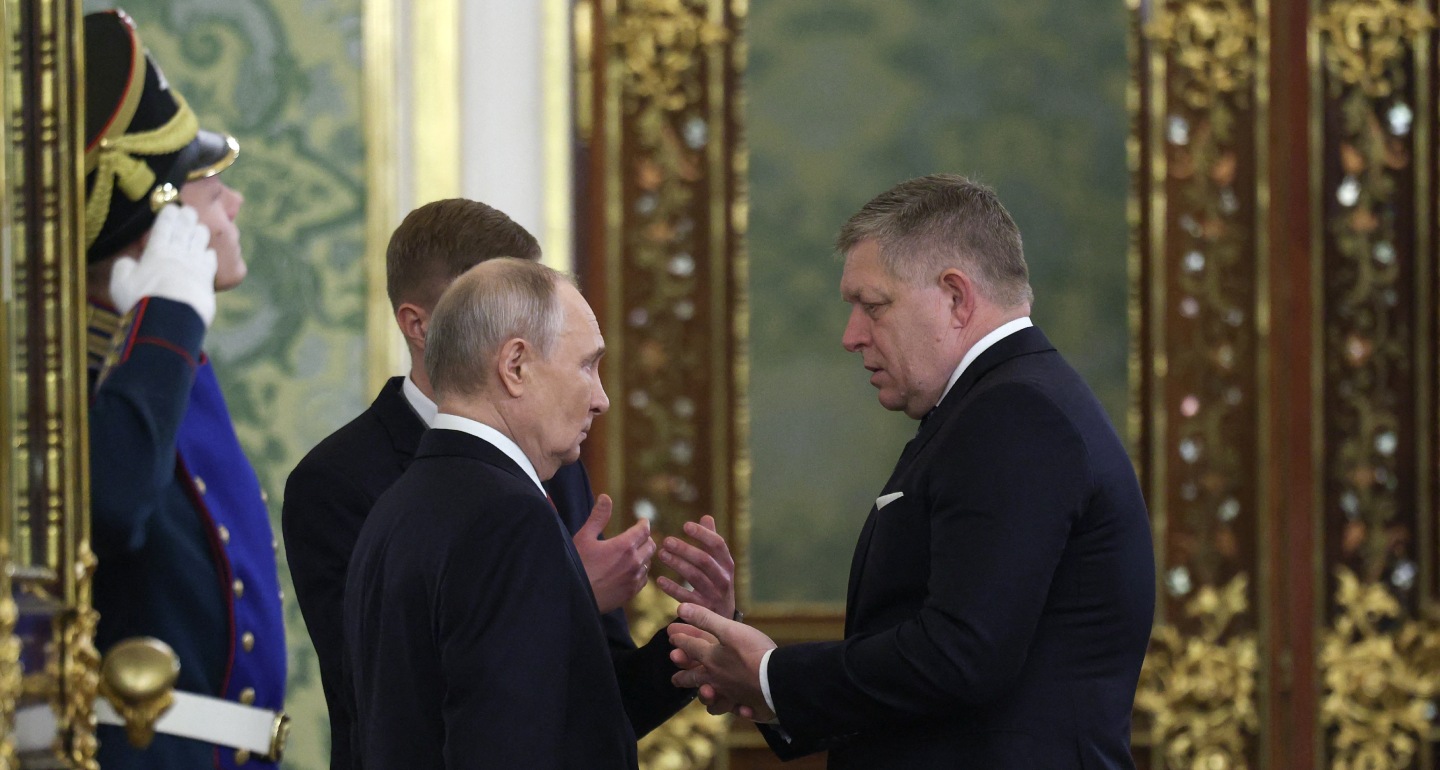
Though Orban is gone, Putin can still count on some like-minded individuals in Central and Eastern Europe. However, they will seek to avoid open confrontation with EU institutions over Ukraine and their ties with Moscow.

Dimitar Bechev
The truth is that Japan’s government is seeking a degree of reengagement but at a vastly reduced level than under Abe. Most significantly, Japan has shown no willingness to ease sanctions.

James D.J. Brown
Azerbaijan’s relations with the EU appear to be going from strength to strength after several years in the deep freeze following the military escalation in Karabakh in 2023 and Azerbaijan’s bitter fallout with France and several other EU member states.

Shujaat Ahmadzada
The cost of air defense has become an unregistered tax on revenue for businesses. While military rents are consolidated in the federal budget, the costs of defense are being spread across the balance sheets of companies and regional governments.

Alexandra Prokopenko
Governments in Estonia, Latvia, and Lithuania want to ensure that a U.S. military withdrawal would not leave them dangerously exposed to a Russian attack.

Sergejs Potapkins