

Q&A
Steve Feldstein, Dara Massicot
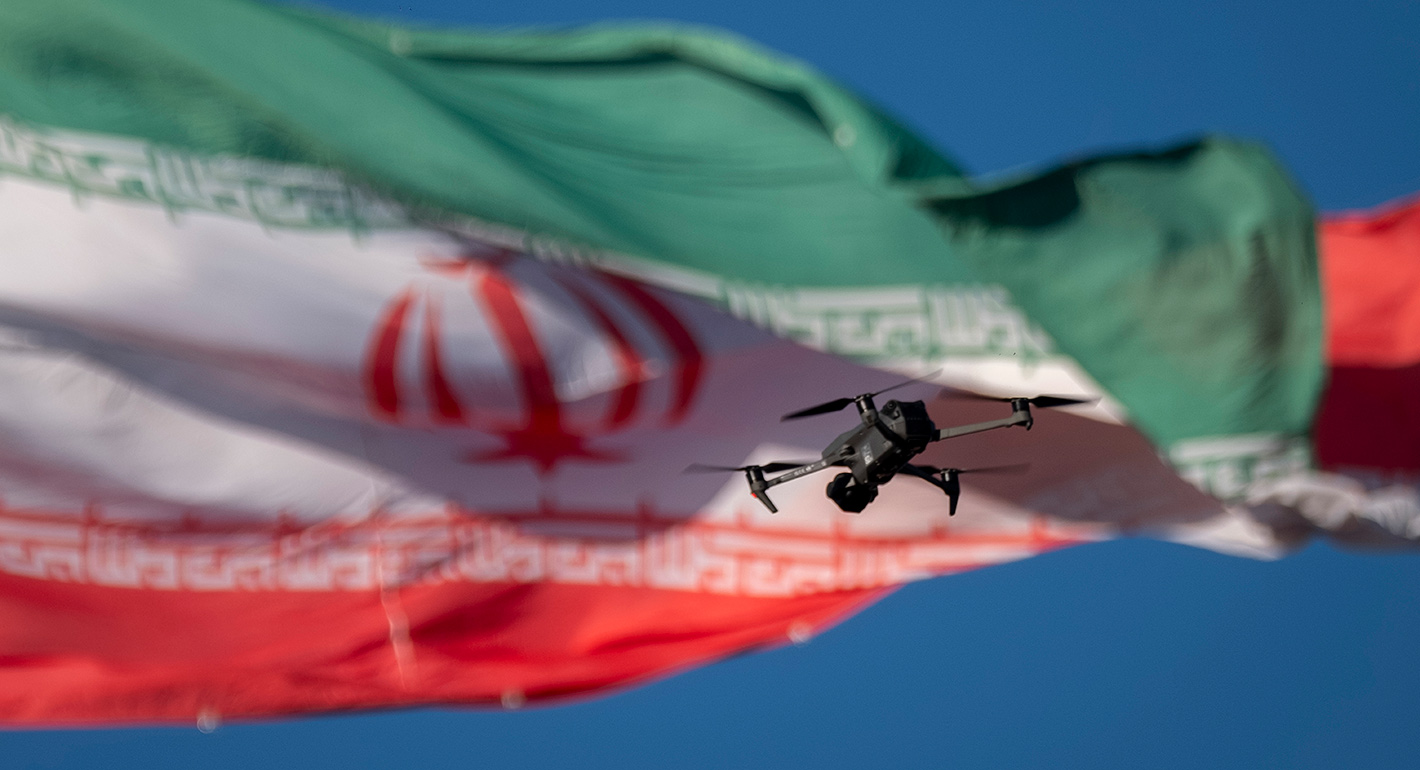
Source: Getty
The Iran war is unique in the scope and scale of asymmetric warfare and AI-enabled conflict. These will test the limits of protecting civilians.
After weeks of fighting, the Iran war has already generated a stream of claims about its significance. Some commentators have labeled it the world’s “first AI war,” arguing that for the United States and Israel, artificial intelligence has moved from a supporting role to the center of the battlefield. Others have focused on Iran’s ability to wage an asymmetric campaign against a far stronger opponent by using cheap drone and missile strikes against economically vital targets, thereby raising the costs of continued fighting. They suggest that Tehran’s strategy offers a playbook for weaker states confronting powerful militaries such as the United States.
These assertions aren’t wrong, but it’s important to place them in context. AI warfare didn’t start with the Iran war. Other countries such as Israel, Russia, and Ukraine have already integrated AI systems into their operations and as pillars of their military strategies. Nor is Iran’s asymmetric strategy particularly novel. From the National Liberation Front’s (FLN) struggle against French rule in Algeria in the 1950s to the confrontations that the Taliban and Ansar Allah (also known as the Houthis) had with U.S. forces, militant groups have traditionally employed asymmetric tactics to bridge gaps against stronger adversaries. The same is true for Iran and its proxies, whose strategy of offsetting superior military hardware with locally produced armaments dates back four decades.
Despite that history, the Iran war will likely spur major shifts. What sets the conflict apart is the unprecedented scale at which these tactics are being deployed on the global stage. Other countries will find Iran’s asymmetric strategy difficult to dismiss, prompting them to adopt similar approaches and develop new defensive measures. Likewise, the United States and Israel’s growing reliance on military AI will push competitors to pursue their own AI-enabled weapons, creating substantial proliferation risks for a largely untested innovation and opening the door to mounting civilian harm.
For decades, Iran’s leaders wrestled with a central question: What mix of strategies would allow them to withstand external military pressure while raising the costs for their adversaries?
The origins of this predicament trace back four decades to the Iran-Iraq conflict of the 1980s, when Iran’s newly established revolutionary regime found itself in a precarious situation. Before the regime, military spending centered on purchasing costly American systems, such as F-14 Tomcats, M60 tanks, and AH-1 SuperCobra helicopters. After the shah was forced into exile in 1979, this approach unraveled; trained military pilots defected, significant military assets were stuck overseas, and the regime could neither maintain existing equipment nor acquire spare parts or new systems because of international sanctions. Accordingly, when fighting broke out between Iraq and Iran in 1980 following a surprise attack from Baghdad, Iran faced a stark choice: adapt to changing circumstances or risk a humiliating defeat.
Consequently, Tehran accelerated its efforts to build a homegrown military industry that would not be reliant on foreign powers or expensive platforms. It focused on developing asymmetric technologies, particularly drones and ballistic missiles. The first drone prototype, the Mohajer-1, debuted in 1985, followed by the Ababil-1 the next year. Both aircraft were designed for battlefield surveillance—to keep watch on Iraqi movements on the front lines. In the ensuing years, Iran proliferated “a dozen different [unmanned aerial vehicle] models,” some of which were primarily locally made, but others of which were sourced from foreign manufacturers, such as Germany’s Siemens corporation. These drones became a core part of Iran’s arsenal, and over time Tehran became a leading supplier of lethal drone technology, equipping its network of Shiite militias with powerful weaponry.
By 2026, Iran had accumulated decades of experience designing, building, and diffusing low-cost drones and ballistic missiles. Shahed-136 drones, first used by the Houthis to strike Saudi Aramco oil facilities in 2019, cost between $20,000 and $50,000 to produce. Ballistic missiles were more expensive, costing about $1 million to $2 million, but still far cheaper than the Patriot or Terminal High Altitude Area Defense (THAAD) interceptors required to stop them. Analysts estimated that Tehran had stockpiled thousands of drones (some experts assessed that the numbers could be as high as 80,000) and amassed 2,500 to 4,000 ballistic missiles. Tehran also had the capacity to produce hundreds more missiles and perhaps thousands more drones each month. The scale of these numbers combined with their low cost gave Iran valuable options. By deploying missiles and drones in large quantities against defined targets, they could saturate defensive systems. Even if most of their attacking drones were shot down, a survival rate of only 10 to 20 percent would still make the strategy viable.
In the first week of the war alone, Iran launched over 2,000 drones and 500 ballistic missiles against U.S. and regional targets. By the time a ceasefire was negotiated, Tehran had fired over 1,300 missiles and launched more than 4,400 drone attacks. While many of Iran’s initial drone attacks were intercepted or missed their targets, over time, their accuracy improved, likely due to Russian targeting assistance. Subsequent investigations revealed that Iranian strikes hit more targets than previously acknowledged, damaging or destroying at least 228 military structures or equipment at sites across the Middle East. Major losses include the destruction of an E-3 AWACS sentry on the tarmac of a Saudi air base, a flying command center that allows for airborne monitoring of up to 120,000 square miles valued at $540 million. An MQ-4C Triton surveillance drone worth $240 million crashed near the Persian Gulf in April, and Iran shot down two dozen MQ-9 Reaper drones at a cost exceeding $700 million. Most notably, Iranian strikes destroyed a $300 million AN/TPY-2 radar at Muwaffaq Salti Air Base in Jordan, the core sensor for the THAAD missile defense system, and likely damaged several others in Saudi Arabia and UAE.
But Iran didn’t limit its counterattacks to U.S. military installations. Another pillar of its strategy was to pursue “horizontal escalation” against economically vital targets in the region. To that end, the regime targeted energy infrastructure, airports, residential areas, diplomatic facilities, oil fields, and desalination plants in Bahrain, Iraq, Kuwait, Oman, Qatar, Saudi Arabia, and the UAE. Over eighty energy facilities were struck in the region, with one-third suffering severe damage. Key targets included the Ruwais Refinery in the UAE, one of the biggest oil refineries in the world, and Saudi Aramco’s Ras Tanura facility, the country’s largest crude processor with a daily capacity of 550,000 barrels. Attacks also knocked out 17 percent of Qatar’s liquefied natural gas shipments, translating to $20 billion in annual lost revenue. “I never in my wildest dreams would have thought that Qatar would be—Qatar and the region—in such an attack,” said Saad al-Kaabi, QatarEnergy’s CEO and the state minister for energy affairs. Eventually, Iran closed the Strait of Hormuz using mines, drones, small attack vessels, and anti-ship missiles.
Undoubtedly, the cost of Iran’s strategy was steep. Most of its senior leadership was wiped out, its navy was severely degraded, and its economy has suffered $270 billion in damage, equivalent to 57 percent of its GDP. It also incurred major civilian destruction with at least 1,700 people killed along with the widespread destruction of residential buildings, schools, hospitals, and bridges. On the flip side, Iran’s military appears to be in better shape than analysts initially assessed—intelligence reports suggest that Iran has regained the use of most of its missile sites and launchers and even restored functioning for 30 of 33 missile sites lining the Strait of Hormuz. In short, Iran played a weak hand as capably as circumstances permitted and displayed more resilience than the Donald Trump administration bargained for. What then are the consequences?
While strengthening resilience against Tehran serves a common interest, it could also give rise to a proliferation dynamic.
One outcome is that Iran’s persistence will spur other countries in the region to reconsider their military strategies. Iran has convincingly shown that cheap, precise munitions manufactured at scale can be highly destructive to its adversaries. To ward off Iran’s drones and missiles, countries in the Gulf spent hundreds of millions of dollars shooting off expensive interceptors, yet they still suffered heavy damage. But that is neither a sustainable nor winning strategy. In late March, Ukrainian President Volodymyr Zelensky visited the region, stopping in Saudi Arabia, Qatar, and the UAE. Certainly, a core message was that Ukraine’s battlefield innovations, particularly its counter-drone munitions, could deter Iranian strikes and protect civilian infrastructure at a fraction of the cost. Discussions likely also explored how regional states could develop and scale domestic drone industries like Ukraine, which produced 3 million drones in 2025 and plans more than 7 million this year. While strengthening resilience against Tehran serves a common interest, it could also give rise to a proliferation dynamic in which multiple countries start manufacturing massive quantities of cheap drones for use against Iran or even each other. As production costs decline, the barriers to deployment would diminish, creating perverse incentives for countries to expand their drone arsenals and ignite a regional arms race.
Iran’s strategy could also set a dangerous precedent whereby attacks on civilian infrastructure become increasingly normalized despite their prohibition under international humanitarian law (IHL). Due to Iran’s military imbalance with the United States, it faces incentives to “level out its inferiority” by disregarding basic rules of war to target energy facilities, desalination plants, and other civilian assets. Other countries could make a similar calculus. When an enemy systematically rejects IHL, opponents could pursue a similar tack—seeking to neutralize an opponent’s advantage by attacking hospitals, schools, bridges, and power plants. This could give rise to a “spiral-down effect,” cautions the International Committee of the Red Cross, where all parties are motivated to disregard international protection norms, thereby placing civilians in ever more precarious situations.
Finally, Iran’s response exposes the limitations of the United States’ current strategy. The sheer cost of defending against Iran’s relentless drone and missile attacks was staggering. In the first days of the war, countries in the region burned through over 800 Patriot missiles. Each PAC-3 interceptor costs about $3.7 million, and standard practice involves firing two interceptors to ensure the incoming threat is neutralized. THAAD missiles are even costlier, with interceptors priced at $12.7 million per unit. “The cost ratio per shot, per interception, is at best 10 to one,” said Arthur Erickson, CEO of the drone manufacturer Hylio. “But it could be more like 60 or 70 to one in terms of cost, in favor of Iran.” Analysts estimated that Washington spent roughly $1 billion to $2 billion per day on its campaign, with total costs exceeding $25 billion. As the war has dragged on, it also introduced a scarcity concern: America’s supply of mainstay weapons has fallen dangerously low—since the start of the war, the military has fired more than 1,000 Tomahawks and used up about half of its stockpile of extended-range stealth cruise missiles. This has dampened America’s readiness to fight another war, and raised more existential questions about how it would fare in a prolonged conflict against a peer adversary like China.
Iran’s response exposes the limitations of the United States’ current strategy. The sheer cost of defending against Iran’s relentless drone and missile attacks was staggering.
While the Pentagon may have underestimated the impact of cheap drones and the disruptions stemming from Iran’s asymmetric strategy, one area where the U.S. military leaned in was its use of military AI systems.
The raw numbers tell a blunt story. In the first twenty-four hours of the Iran war, the United States struck over 1,000 targets, or roughly forty-two targets per hour. As of the ceasefire, U.S. forces had destroyed more than 13,000 targets. (The situation had reached a point where the Pentagon’s planners had largely exhausted Iran’s high-value targets.) The tempo of strikes would not have been possible without the deployment of a new tool: Maven Smart System, overseen by Palantir and powered for now by Anthropic’s Claude AI.
Maven was a response to a perplexing problem: By the mid-2010s, the Pentagon was drowning in surveillance data taken from drone footage, signal interception, mobile phones, and internet traffic. It lacked an efficient way to process this information for targeting. In the recent past, officers logged targets into Microsoft Excel spreadsheets, used PowerPoint slides for data visualization, and inserted analytic write-ups into Word documents that were sent up to commanders for action. The military urgently needed a tool that could move targets from detection to execution far more quickly. This is where Maven came in. At its core, the platform resembles standard corporate project‑management software repackaged for military use. After Claude was added to the system in 2023, Maven could fuse intelligence from multiple sources into a single operational interface. During the Iran war, it identified and prioritized targets in real time, generated GPS coordinates for strikes, and recommended specific weapons systems best suited for each operation. The platform even drafted “automated legal justifications” along the way. Once completed, targeting packages were sent up to commanding officers for final approval and execution—the whole process accomplished in “four clicks.”
The results were stunning. “The US went from being able to hit under a hundred targets a day to being able to hit a thousand,” writes Katrina Mason in her book Project Maven. “In combination with large language models [like Claude] integrated into the Maven platform, that number has risen fivefold to five thousand targets a day.”
Accordingly, a system operating at such speed and volume would bring downside effects. In simple terms, Maven compressed the kill chain by sharply reducing the number of humans involved. In previous conflicts, such as the 2003 Iraq war, the Pentagon required 2,000 people working around the clock to generate about 20,000 strikes. By 2020, however, just twenty soldiers using the Maven system could handle the same volume of tasks. The Pentagon set an even more ambitious goal in 2024, achieving 1,000 targeting decisions in an hour or “one decision every 72 seconds.” The priority was efficiency: identifying and striking more targets in a compressed period of time while using fewer humans. To that end, Maven proved successful, but the trade-offs were steep.
Fundamentally, compressing the kill chain entails removing points of bureaucratic friction.
Fundamentally, compressing the kill chain entails removing points of bureaucratic friction. Certain practices were inefficient, such as manually transferring targeting data across multiple spreadsheets, but others functioned as intentional checkpoints for oversight, such as requiring sign-offs before moving to the next targeting phase. The Pentagon’s removal of procedural barriers not only eliminated process checks but also diminished the allotted time available to process incoming information. When a system gives officers just seventy seconds to decide whether to move a targeting package forward, the design inherently biases decisions toward approval, even when confidence levels are low. The consequence: more errors and greater civilian harm.
As I have explored in past articles about the impact of military AI technologies, there are valid reasons for concern. For example, the Israel Defense Forces (IDF) developed an AI program called Lavender, which has played a central role in guiding missiles and bombs in the Gaza war. The program was designed to identify suspected Hamas and Islamic Jihad operatives as potential targets; it registered as many as 37,000 Palestinians for possible airstrikes in the first weeks of the conflict. But IDF personnel had incredibly tight windows in which to authorize Lavender’s decisions, as few as twenty seconds for each targeting package. More alarming, the system made errors in roughly 10 percent of cases, flagging individuals with only loose connections—or no ties at all—to militant groups. Given the volume of strikes authorized through Lavendar, a 10 percent error rate presumably meant that thousands of civilians were wounded or killed by mistake.
As for the Iran war, accounts showed that U.S. strikes inflicted a heavy toll on civilians and infrastructure. Reporting from the New York Times verified damage to at least twenty-two schools and seventeen healthcare facilities, including a school in Minab where a U.S. strike killed over 150 children. (That same article noted that the devastation was likely far higher: The Iranian Red Crescent Society, the chief humanitarian relief organization in the country, documented at least 763 schools and 316 healthcare facilities damaged in the war.) The startling level of damage raises urgent questions about the accuracy of Maven and the extent to which the Pentagon established proper targeting oversight.
When the kill chain is compressed to such a point that meaningful human oversight becomes largely symbolic, then the balance between speed and accuracy has shifted too far in the wrong direction, and slowing down AI-enabled processes becomes necessary. At a minimum, military AI’s uneven track record undermines claims that integrating powerful large language models into targeting will yield greater precision or better distinguish civilians from combatants. More concerning, as Israeli legal scholar Yahli Shereshevsky points out in a companion Carnegie piece, the pace and scale of AI-enabled targeting risks facilitating levels of harm far greater than previously contemplated, thereby eroding the principle of restraint that lies at the heart of IHL—the idea that militaries should limit how they wage war to prevent unnecessary suffering.
The Iran war is unique in the scope and scale that asymmetric warfare and AI-enabled conflict have been deployed. Both approaches create proliferation risks and test the limits of civilian protection. In an increasingly competitive environment, many countries will be tempted to pursue low-cost, scalable drone solutions and reap efficiency gains by relying on military AI systems. Countries risk slipping into an accelerating drone and AI arms race even as the rules governing armed conflict are straining under Russia’s war in Ukraine, Israel’s campaigns in Gaza and Lebanon, and Trump’s maneuvers in Iran. As Zelensky warned in his address to the UN General Assembly last year, the world urgently needs “global rules now for how AI can be used in weapons.” But whether international leaders can summon the political will to establish minimal constraints on the uses of these technologies is far from certain.

Senior Fellow, Democracy, Conflict, and Governance Program
Steve Feldstein is a senior fellow at the Carnegie Endowment for International Peace in the Democracy, Conflict, and Governance Program. His research focuses on technology, national security, the global context for democracy, and U.S. foreign policy.
Recent Work

Steve Feldstein, Dara Massicot

Jon Bateman, Steve Feldstein
Carnegie does not take institutional positions on public policy issues; the views represented herein are those of the author(s) and do not necessarily reflect the views of Carnegie, its staff, or its trustees.

Previous dialogues ended in failure. This time could be different.

Scott Singer
Why the outcomes of the U.S.-China meetings may be limited.


Aaron David Miller, David Rennie
AI in warfare has numerous impacts, including how they shape human responses to target recommendations and how they increase the speed at which lawful targets can be recommended.
Yahli Shereshevsky
Governments in Estonia, Latvia, and Lithuania want to ensure that a U.S. military withdrawal would not leave them dangerously exposed to a Russian attack.

Sergejs Potapkins

Because perpetual conflict enhances control, offers economic benefits, and allows leaders to ignore popular preferences.

Angie Omar